Too Much Junk Science
Posted 10/31/13
 By Gordon Schnell
We read about them all the time. The latest major breakthrough in taming one disease or another. If not an ultimate cure-all, then at least a novel treatment to ease the condition or its associated symptoms. In some cases, these reported advances really do result in groundbreaking remedies that improve the lives of many. But in just as many cases it seems, after the initial hype has...
By Gordon Schnell
We read about them all the time. The latest major breakthrough in taming one disease or another. If not an ultimate cure-all, then at least a novel treatment to ease the condition or its associated symptoms. In some cases, these reported advances really do result in groundbreaking remedies that improve the lives of many. But in just as many cases it seems, after the initial hype has...
 Too much screen time for kids – With the average child spending 8 hours a day in front of a TV, cell phone or computer, the American Academy of Pediatrics calls for parents to significantly reduce their kids’ screen time.
 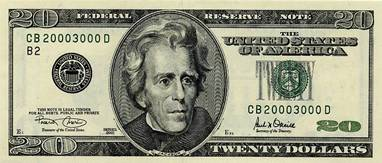 Whistleblower enforcement provides 20-to-1 return – A report by Taxpayers Against Fraud finds the government recovers $20 for every $1 it spends prosecuting healthcare fraud under the False Claims Act whistleblower statute.
  More bad news on antibiotics overuse – A new Johns Hopkins report finds that feeding antibiotics to livestock is posing major public health risks but the farm and pharmaceutical lobbies have blocked efforts to stop it.
 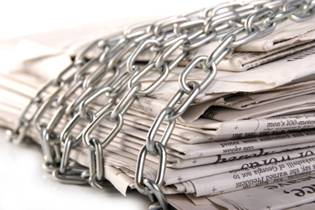 Wall Street Journal prohibited from disclosing LIBOR culprits – A UK court grants a request from the UK Serious Fraud Office preventing the paper from identifying individuals the UK plans to implicate in the LIBOR rate-fixing scheme, a press restriction unheard of in the U.S. WSJ
Snowden denies disclosing secrets to Russia – The NSA whistleblower says he dumped all his classified documents before fleeing to...
Wall Street Journal prohibited from disclosing LIBOR culprits – A UK court grants a request from the UK Serious Fraud Office preventing the paper from identifying individuals the UK plans to implicate in the LIBOR rate-fixing scheme, a press restriction unheard of in the U.S. WSJ
Snowden denies disclosing secrets to Russia – The NSA whistleblower says he dumped all his classified documents before fleeing to...
 By
By  New vehicle for whistleblowers to report anonymously to press – Freedom of the Press Foundation introduces SecureDrop, an open-source system that permits whistleblowers to send reporters information and documents incognito.